Well, I did it: I wrote four stories and published them as limited-edition pamphlets at quarterly intervals through 2009. I can’t exactly recall how or why the idea came about, but the objective was to release the literary equivalent of a series of singles that together form a set. I could have published a collectiom of short stories, but having done that in 2007 with ‘Bad Houses’ I decided I needed a new strategy, a new challenge. Moreover, as the publishing industry is as fucked as the music industry, it’s down to the writers themselves to come up with innovative new strategies for getting their works not only out there, but sold. There’s no small irony in the fact that, as a music obsessive, I elected to employ an old music industry tactic in the form of the limited edition for my 2009 project. After all, there’s nothing like a limited edition to create buzz, not to mention a potential future collectable.
By using the same artwork but in a different colour for each publication, the thematic unity of the contents would be reinforced by the visual presentation (while also recreating the effect of coloured vinyls – sort of). Having declared that I would be producing these pieces, I then had to do some serious writing. At the same time, I was aware that there was a very grave danger of overkill after a fairly prolific couple of years, with ‘Bad Houses’ and ‘C.N.N.’ in 2007, ‘THE PLAGIARIST’ and ‘Postmodern Fragments’ and a proliferation of magazine publications in 2008. Consequently, I decided I should cut back on other works save for a few carefully and strategically selected contributions – primarily in Paraphilia Magaine, which I believe is the best zine out there right now, and THE place to be seen.
I didn’t set out with any specific theme in mind, although other pieces I had already been working on suggested emerging concerns – obsessions may perhaps be a more accurate choice of word – and so I decided to focus squarely on these issues in ‘Lust for Death.’ It didn’t so much stare death in the face as take it outside and challenge it to a bout of bare-knuckle fisticuffs, while also taking a new approach to narrative, recounting the same events from three different narrative perspectives.
Despite wanting the publications to be quite closely linked and thus evidently part of a sequence or collection of related works, it was essential to me that I tried a different approach for each story, and set myself a new challenge. As such, the styles of the stories are varied, although I’ve been pleased with the results on each occasion, while also feeling a sense of achievement knowing that I had pushed myself every time.
‘Before the Flood’ took a slightly more oblique approach to issues of (im)mortality. Taken from a much larger piece the tone was also rather different, and more overtly literary. The third pamphlet, ‘Counting the Hours’ was a more introspective piece, with events confined to a single hour in the life of an agoraphobic first-person narrator. Because I was in the process of moving house at the time of its publication, I didn’t do a great deal to promote it, and this was reflected in the sales, which were, frankly, abysmal. Disappointing, to say the least, as this is, in my opinion, the strongest of the three (not to mention the longest by far).
I was almost tempted to ditch the project at this point, but having some this far, I got back on that bike and rode it… hard. The result is the fragmented, multi-voiced, many-angled ‘A Reflection,’ which revisits many of the themes of the preceding works of the series, and even echoes some of the narratives contained therein, while interweaving these with my own personal reflections on events, concepts and even the writing process of the series and other (dis)connected texts. It’s as close to autobiography as I’ve come in any of my (published) works, although it’s a most postmodern literary exercise, in that it intentionally blurs the boundaries between author / narrator / character, fact / fiction, biography / fabrication. Moreover, as much as it is ‘a reflection’ on the past tear and the closing decade, it’s also a hint of the direction my writing is heading, the avenues I’m inclined to pursue over the next couple of years.
I intend to publish less still in 2010. Paid work and a focus on the completion of longer works mean that shorter pieces will simply not be viable. In addition, I have a substantial hoard of works – including 2 novels and 2 novellas – that lurk unpublished, and submitting work is easily as time-consuming as producing it. The reviews and blogs will continue, and there will be more fiction and rants. But less is more, and while exposure is the way forward in any quest for ubiquity, there is such a thing as overkill, and there are other avenues yet to be explored.
Anyway, 2010 will kick off in dramatic style with the launch of the ‘Clinical, Brutal’ anthology that I’ve edited and am inordinately proud of, and I have a stack of pamphlets in the office just waiting to be dispatched. They’re only available via christophernosnibor.co.uk and are sure to be worth a packet in another ten years’ time!
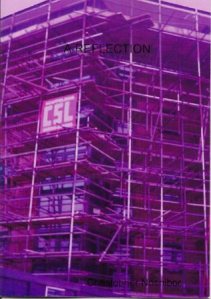
By using the same artwork but in a different colour for each publication, the thematic unity of the contents would be reinforced by the visual presentation (while also recreating the effect of coloured vinyls – sort of). Having declared that I would be producing these pieces, I then had to do some serious writing. At the same time, I was aware that there was a very grave danger of overkill after a fairly prolific couple of years, with ‘Bad Houses’ and ‘C.N.N.’ in 2007, ‘THE PLAGIARIST’ and ‘Postmodern Fragments’ and a proliferation of magazine publications in 2008. Consequently, I decided I should cut back on other works save for a few carefully and strategically selected contributions – primarily in Paraphilia Magaine, which I believe is the best zine out there right now, and THE place to be seen.
I didn’t set out with any specific theme in mind, although other pieces I had already been working on suggested emerging concerns – obsessions may perhaps be a more accurate choice of word – and so I decided to focus squarely on these issues in ‘Lust for Death.’ It didn’t so much stare death in the face as take it outside and challenge it to a bout of bare-knuckle fisticuffs, while also taking a new approach to narrative, recounting the same events from three different narrative perspectives.
Despite wanting the publications to be quite closely linked and thus evidently part of a sequence or collection of related works, it was essential to me that I tried a different approach for each story, and set myself a new challenge. As such, the styles of the stories are varied, although I’ve been pleased with the results on each occasion, while also feeling a sense of achievement knowing that I had pushed myself every time.
‘Before the Flood’ took a slightly more oblique approach to issues of (im)mortality. Taken from a much larger piece the tone was also rather different, and more overtly literary. The third pamphlet, ‘Counting the Hours’ was a more introspective piece, with events confined to a single hour in the life of an agoraphobic first-person narrator. Because I was in the process of moving house at the time of its publication, I didn’t do a great deal to promote it, and this was reflected in the sales, which were, frankly, abysmal. Disappointing, to say the least, as this is, in my opinion, the strongest of the three (not to mention the longest by far).
I was almost tempted to ditch the project at this point, but having some this far, I got back on that bike and rode it… hard. The result is the fragmented, multi-voiced, many-angled ‘A Reflection,’ which revisits many of the themes of the preceding works of the series, and even echoes some of the narratives contained therein, while interweaving these with my own personal reflections on events, concepts and even the writing process of the series and other (dis)connected texts. It’s as close to autobiography as I’ve come in any of my (published) works, although it’s a most postmodern literary exercise, in that it intentionally blurs the boundaries between author / narrator / character, fact / fiction, biography / fabrication. Moreover, as much as it is ‘a reflection’ on the past tear and the closing decade, it’s also a hint of the direction my writing is heading, the avenues I’m inclined to pursue over the next couple of years.
I intend to publish less still in 2010. Paid work and a focus on the completion of longer works mean that shorter pieces will simply not be viable. In addition, I have a substantial hoard of works – including 2 novels and 2 novellas – that lurk unpublished, and submitting work is easily as time-consuming as producing it. The reviews and blogs will continue, and there will be more fiction and rants. But less is more, and while exposure is the way forward in any quest for ubiquity, there is such a thing as overkill, and there are other avenues yet to be explored.
Anyway, 2010 will kick off in dramatic style with the launch of the ‘Clinical, Brutal’ anthology that I’ve edited and am inordinately proud of, and I have a stack of pamphlets in the office just waiting to be dispatched. They’re only available via christophernosnibor.co.uk and are sure to be worth a packet in another ten years’ time!
‘A Reflection’ is officially published on December 30th. Orders are being taken now at Christophernosnibor.co.uk.
 Christopher's Headspace