
Author: christophernosnibor
Writer, ranter, purveyor of postmodern fiction; 50% of the Clinicality Press editorial team, editor at Aural Aggravation, contributing editor at Paraphilia Magazine, and music reviewer for Whisperin' and Hollerin' and Shout4Music. Sleep is for wimps.
Christmas Wasn’t So Bad (Part 1)

2014: A Year in Books
This is categorically not a list of my ‘best books’ of 2014. Very few of the titles I’ve read in the last 12 months were even published this year. This is simply a list of what I’ve read with no judgement implied (although I strongly maintain life;s too short to read crap books, so by default they’re all pretty good).
With my day-job having moved to a different office, I’m fortunate and grateful that I no longer spend an hour a day on public transport. The downside is that the half hour trip each way to and from work was time I spent reading up to the end of June and consequently, I’ve done rather less reading this year than I would have liked.
These are the books I’ve read, which have informed and entertained me this year, and some will have no doubt had an influence – conscious or otherwise – on my writing.
Ben Jeffery – Anti-Matter: Michel Houellebecq and Depressive Realism
Raymond Chandler – Farewell, My Lovely
Jonny Glynn – The Seven Days of Peter Crumb
Ian Rankin – The Naming of the Dead
Henry Sutton – Kids’ Stuff
Aifric Campbell – On the Floor
Gavin Lambert – The Goodbye People
JG Ballard – The Drought
Douglas Coupland – Generation X
Paolo Sorrentino – Everybody’s Right
Samuel Beckett – Three Novels: Molloy / Malone Dies / The Unnamable
Various – Clinical, Brutal 2: Incisive Writing with Guts
Philip Roth – Portnoy’s Complaint
Mickey Spillane – Mike Hammer Omnibus Vol 1: I, The Jury / My Gun is Quick / Vengeance is Mine
Lisa Dabrowski – Dr Sadistic’s House of Whorrors
Martin Crimp – Attempts on Her Life
Chuck Palahniuk – Damned
Malcolm Mc Neill – Reflux
Charlie Wells – Fags and Lager
Beau Rice – Tex
Stewart Home – The 9 Lives of Ray The Cat Jones
Stuart Bateman – Grind
Jonathan Crary – 24/7: Late Capitalism and the Ends of Sleep
And if you’re loving my work, there’s more of the same (only different) at Christophernosnibor.co.uk
20 Albums of 2014
Getting to listen to and review and insane number of new releases is something of a double-edged sword. Time was when I’d have to go out and buy music if I wanted to hear it and I’d play it to death, and then play it some more. Now I’m exposed to more music than I can even begin to assimilate. Thankfully, I get the majority of albums I want to hear sent to me in the name of work, and better still, I discover incredible bands I would have never otherwise encountered. It does mean that I forget a lot of what I’ve heard, even when it’s really good.
So, what this list represents more than anything is the albums that stuck. That I played on throughout the year, and that I’ll be playing into 2015 and probably beyond. It could have been much longer, because despite what you’ve probably read each year for the last decade about the decline of music, there’s still an awful lot of fantastic and extremely exciting, moving music being released. You just need to know where to look, and won’t hear it in the charts or on mainstream radio.
Having penned some 450 reviews this year, I’ve kept the list down to 20 releases because any more would be daft. They’re not in rank order, but a vaguely chronological order of release, and yes, it’s entirely subjective. It’s my list . I make no apologies for it, for any bias towards Leeds bands or guitar-based music, and I’m not going to bicker over inclusions / exclusions because it’s my list. And here it is.
Brace/Choir – Turning On Your Double
Arrows of Love – Everything’s Fucked
Swans – To Be Kind
OFF! – Wasted Years
Post War Glamour Girls – Pink Fur
Her Name is Calla – Navigator
Xiu Xiu – Angel Guts: Red Classroom
Space Siren – If You Scream…
Astronauts – Hollow Ponds
VANIISH – Memory Work
Lawrence English – The Wilderness of Mirrors
DZ Deathrays – Black Rat
Esben & the Witch – A New Nature
Black Moth – Condemned to Hope
Earth – Primitive & Deadly
Amplifier – Mystoria
Godflesh – A World Lit Only by Fire
The Twilight Sad – Nobody Wants to be Here, Nobody Wants to Leave
Interpol – El Pintor
Scott Walker & Sunn O))) – Soused
And if you’re loving my work, there’s more of the same (only different) at Christophernosnibor.co.uk
Christopher Nosnibor’s Guide to Working as a Music Reviewer – Part Three
No two ways about it, the 9-5 is a pain in the proverbial. No doubt if you’re an aspiring reviewer you’re resentful of the humdrum desk job, bar job, whatever, and who would blame you. Unfortunately, it’s the humdrum desk job, bar job, whatever that pays the bills.
I resent the humdrum desk job as much if not more than anyone, although it was while working my day-job that a not insignificant realisation hit. I’d landed the task of leading a group of colleagues through a session on letter-writing. These are people, adults, who write detailed letters to customers daily. It’s their job. I was shocked, and indeed appalled, to realise just how far back to basics I had to take things.
I found myself having to explain not only the possessive apostrophe, and the difference between affect and effect, but also the definition of a noun and a verb, singular and plural.
I expect the bulk of my readers will laugh or feel a wave of despondency. However, anyone who aspires to be the next Nick Kent and who’s stumbled upon this blog in the hope of finding advice or otherwise gleaning some tips for making it – whatever that may be – as a music reviewer, I will proffer the following: learn to write.
If their / they’re / there is beyond you, give up, immediately. Enjoy the music, but please don’t inflict your illiterate drivel on others.
Similarly, if you’re reading this and have no idea who Nick Kent is, you don’t have a hope. Writing about music requires a knowledge of music, and ideally, a knowledge of music journalism. This is true in almost any field of critique. Yes, it’s all about opinion, but your opinion only has weight if you can qualify if with some kind of evidence. No-one’s going to respect your opinion if you don’t know shit.

And if you’re loving my work, there’s more of the same (only different) at Christophernosnibor.co.uk
Christopher Nosnibor’s Guide to Working as a Music Reviewer – Part Two
We live in a visually-orientated culture. Pictures are more immediate than words. And yet I still don’t get the idea of reviewing a gig in pictures alone. The images convey so little of the experience, and besides, after a while, people with guitars or standing behind synths all start to very much resemble one another.
Similarly, I don’t get the whole deal with people posting photos of their food on social media sites, but did recently suggest that my refusal to subscribe to this trend was proving an obstacle to my achieving mainstream popularity.
So I figured I should document my day – yesterday – in images. Of food. It seems vaguely apposite, as I was assigned to review Black Bananas at the Brudenell in Leeds last night.
I got up a bit before 7am having squeezed in about 6 hours sleep, dressed, guzzled down a mug of tea and was out the door around 7:40. I breakfasted at my desk while wading through emails.
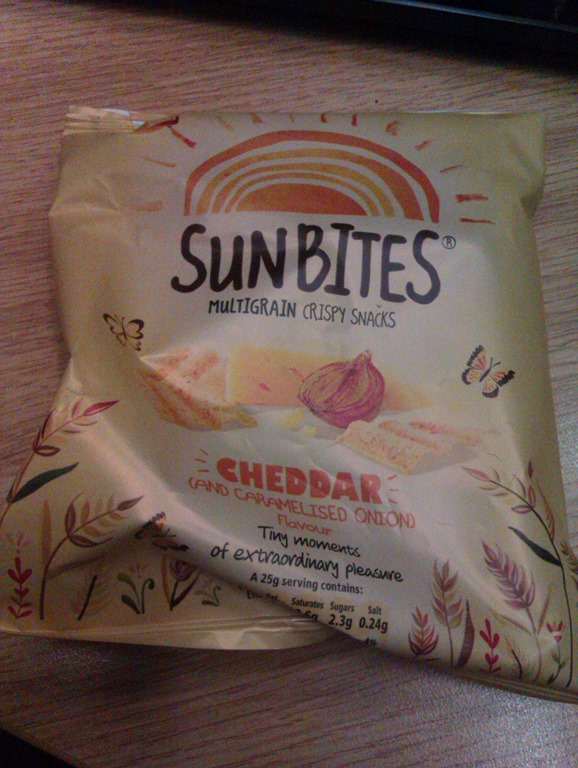
Breakfast
I managed to nip out to grab a bite for lunch, again consumed at my desk.

Lunch
After work, I legged it home, dropped my bag and changed my boots before heading straight back out for a train to Leeds. I had my evening meal in Foley’s on The Headrow before trekking out to the Brudenell.

Dinner
I needn’t have rushed as the first act wasn’t on till around 8:30, but the beer was cheap and good and I always carry a paperback in my jacket pocket in case I find myself killing time.
The show was ultimately enjoyable, but I was aware of the train times and, being knackered, decided to slip out during the last song for the 11:16 train. This meant I had to run all the way from The Brudenell near Burley Park to the train station. Consequently, I was even more knackered but I arrived back in York in good time and arrived home around midnight.
Today, having woken up with heartburn and a head full of things I needed to do at work around 5am, I managed a full half hour lunch break, during which I managed to find a quiet pub and knock out the first 409 words of my review. I can’t very well call myself a writing machine if I don’t get on and write now, can I?
And if you’re loving my work, there’s more of the same (only different) at Christophernosnibor.co.uk
Christopher Nosnibor’s Guide to Working as a Music Reviewer – Part One
For those who think that working as a music reviewer is way cool and involves hanging with bands backstage and basking in free stuff and record company promo largesse, the average online music reviewer leads a very different existence. I’m not saying I’m representative of all or even most music reviewers, but as someone who’s been doing this thing for nigh on 20 years off and on, and has consistently turned in over 300 reviews a year since 2009, I do feel I’m at least qualified to report on my own experiences. Will this blog help aspiring reviewers? Probably not. Is it some kind of therapy session? I have no idea. It’s a blog. It is what it is.
When I started writing in earnest for Whisperin’ and Hollerin’ in November of 2008, I was thrilled to receive a Jiffy containing five or six CDs by artists I’d never heard of, and would never hear of again. I was actually off work with ‘flu when they landed, so I say, huddled in a blanket, streaming snot as I shivered and shook my way through a bunch of fairly bland albums, which I dutifully listened to a handful of times and did my best to give them a fair and honest but critically balanced and objective appraisal. It wasn’t easy, at least for all of them.
I started to receive offers of gigs to review in York and Leeds, too, my nominated / designated territory. Keen to get myself on the register, I took the first few that came up regardless. I wanted to prove myself, to get my name out, to show I was eager and willing, and able to critique anything. And so I did. I saw some ok bands, the majority of which I’ve since forgotten. I saw a fair few shit bands, too, but you gotta take the rough with the smooth, I figured.
Being a serious gig veteran (I started watching pub gigs and so on when I was 14 and saw my first big gig proper – The Mission at Sheffield City Hall – when I was 15) I wasn’t the sort to be swept away on the tide of excitement the inexperienced feel when presented with live music. I didn’t think ‘it’s live, therefore it’s amazing’ and was more than capable or retaining my critical faculties – and memory – even after a few pints.
It’s fair to say things rapidly snowballed.
Cut forward from 2008 to 2014 and I’d like to say the hard works paid off. In some respects it has, in that I now receive more free music than I can physically listen to, and manage to score many of the releases I’d have previously paid for for free. Similarly I can pick and choose the live shows I cover, and get to go and see bands I’d have historically paid for – or even missed because I couldn’t afford a tickets, although I still take punts, and I still review acts I’m either unfamiliar with or largely ambivalent to because I think covering them will help raise my profile.
I still don’t get paid for any of this and I still work the 9-5. Trying to do up a house and be a half-decent parent to a 3 year old with a full-time job is enough for most people. They’re pussies, or otherwise lacking ambition.
Tomorrow, I’ll be hauling myself from York to Leeds and out to the Brudenell Social Club after work to cover Black Bananas. I thought their most recent album was middling, a 6/10 but figure they might be entertaining as a live act. I’ll be going on my own, despite being offered a +1. Because I’m popular like that. I won’t hang out with the band. I’ll get back in around 2am and will be up less than five hours later for work. Because. Cool huh?
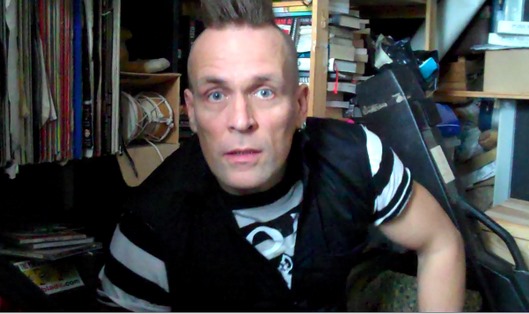
John Robb: music journalist, band front man and cool. The bastard.
And if you’re loving my work, there’s more of the same (only different) at Christophernosnibor.co.uk
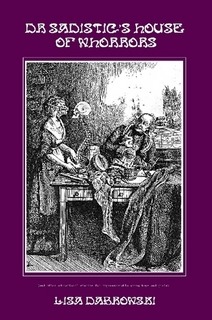
Review: Dr Sadistic’s House of Whorrors by Lisa Dabrowski (Oneiros Books)
Lisa Dabrowski, the pensmith behind the dominatrix, sexual terrorist and demi Goddess that is Mistress Rosie, takes her celebrated kinkiness a step further with this collection. Be warned: it’s a bold work, and while half the world’s still frigging itself silly over EL James’ ‘literary’ creations Dabrowski shows us she knows what real Sadomasochism is all about. It’s not hard to see why it found a home at Oneiros Books, because 50 Shades style mummy porn it most certainly isn’t.
There’s a distinctly ‘vintage’ feel to the whole publication: the narratives are executed in a way that feels like it belongs to a former time in history. This is certainly no criticism: in eschewing the trappings of the contemporary and instead feeding from more historical stylistic tropes, ‘Dr Sadistic’s House of Whorrors’ is imbued with a ‘classic’ and ‘timeless’ quality absent from the majority of contemporary texts. This ‘old school’ feel feeds through into the presentation, far beyond the pen-and-ink cover art an into the very fabric of the text, laid out in a heavy and ornate script that stentoriously announces itself as ‘17th Century’. These are only a few of the book’s many strengths, and Dabrowski builds things well across the series of pieces contained here.
The blurb promises ‘Poignant accounts of male correction that are both arousing and politically subversive’ and ‘Dr Sadistic’s House of Whorrors’ doesn’t disappoint. This is pretty dark stuff. Our first meeting with Dr Sadistic reveals that he’s a character worthy of his name. ‘He opened the door to the lab; I notice on the shelves were what appeared to be canning jars, full of discarded fetuses. I should have run, but curiosity on what his explanation would be got the best of me.’ A such, we’re escorted – with a firm grip on the arm and the unspoken threat of unimaginable pain – into a world of classic psychological horror. I say psychological, because the horrors depicted are those that instead fear and dread. It’s not nearly as much about the fear of physical pain as the torment the images elicit.
‘Dr Sadistic and the Zombie Slaves’ draws on classic tropes and combines it with elements of contemporary horror while also incorporating some sharp twists on genre trappings coupled with some great storytelling.
It isn’t easy to cover this book without giving away many of the essential features which means I should probably halt at this juncture with the admonition that if you’re after something darkly perverse, look no further.
Dr Sadistic’s House of Whorrors is available on line.
Writing about Writing (Again): A Slap of Reality in a World of Fiction
On TV and in films, and even in many novels, writers are often – if not almost always – portrayed as high-profile media types, living the high-life, traversing here and there in sharp suits and fancy dresses, to interviews, readings, launches and high-profile media events. they’re inevitably best-sellers, and vaguely eccentric, and live in nice, even vaguely grand homes or apartments (if they’re American): they get stopped in the street (and, if you’re Castle, at crime scenes) by fans who simply love your books, live and breathe your characters and want to marry you., or at least have an affair.
Now, I’ll be the first to admit that the literary circles I move in are toward the lower end of the industry. By which, of course, I actually mean they exist outside of ‘the industry’. They work regular jobs, have families and chisel out their works in stolen hours late at night and early in the morning. They do it out of compulsion, a need to purge and splurge, rather than for the money. It almost goes without saying I count myself amongst these. Writing isn’t some hobby or light-relief pastime.
The writers I know and associate with are, believe it or not, more representative of writers than the popular portrayals of writers. With a few notable exceptions – Stephen King, JK Rowling, for example – writers tend to be fairly anonymous. Unlike actors, writers don’t get their faces splashed over huge billboards. Writers aren’t usually the most photogenic of people, which is often why they’re writers and not actors. Do you know what E.L. James looks like? Dan Brown? John Grisham? Jodi Picoult? Donna Tartt? Toby Litt? And these are ‘bestseller’ list authors, not the majority of people who constitute the world of publishing in all its guises.
It’s ironic that actors get paid megabucks for playing out the scenes laid out in the pages of books penned by anonymous writers, and earn significantly more for doing so, given that without the writers, the actors would have no scenes to perform. it’s all about having a face and an image that sells. ‘Game of Thrones’ author George R.R. Martin didn’t get rich posting selfies and posing for Vogue.
Fiction is often escapist: it doesn’t have to be fantasy or sci-fi to take the reader beyond the confines of their hum-drum daily existence. And so it may be that even writers who earn royalties of pence and cents may portray high-living celebrity writers in their works. I have no gripe about that, per se, other than the observation that it flies very much in the face of the first principle of writing, which is ‘write what you know.’ This doesn’t mean fantasy and science fiction are out by any stretch, so much as that it pays to at least research scenarios that exist beyond your knowledge, because a savvy reader can spot a bluffer. Research plus imagination is, of course, another matter entirely and can be the very essence of creative genius.
As such, I resist the urge to yell at the TV when ‘celebrity’ writers are portrayed. Of course, my initial thought is ‘when do these people get to do any writing, given the time they spend travelling around to premieres and being famous?’, but the answer is obvious – namely, the rest of the time. Because unlike the writers I know, they don’t work the 9-5, and their maids and the like take care of the kids while they swan round in the name of ‘research’.
Recent research suggests that the prospects of a writing career are pretty dismal if you’re looking to get rich, even if you do achieve a degree of fame: Prospects.ac.uk report that ‘The median earnings for professional writers (those who dedicate more than 50% of their time to writing) was only £11,000 in 2013, and only 11.5% of professional writers earned their incomes solely from writing.’ The Guardian reports that ‘The typical median income of all writers was even less: £4,000 in 2013, compared to £5,012 in real terms in 2005, and £8,810 in 2000.’
This is nowhere near a luxurious salary. It’s not even minimum wage. It’s certainly well below the £16,850 figure the Joseph Rowntree Foundation says is needed to achieve a minimum standard of living. It means that writers don’t live in palatial mansion-type homes, resplendent with antique furniture (unless they’ve inherited it) or plush penthouse apartments. They may have heaps of books on their shelves (the majority likely either purchased second hand or sent to them for review or in trade) but the chances are most writers don’t rise around brunchtime and slip on a silk bathrobe before a serving of eggs Benedict and then chip out a page or so while sipping sherry or 50-year old single malt in their resplendent superbly plush leather-upholstered chair at a Louis XIV desk in the prime spot in a mahogany-panelled library. No, writing is work: hard work, even for ‘successful’ authors. And given that in the region of 99% of all books published sell fewer than 100 copies, what hope is there fore the rest of us to break through to the major league?
The rest of us – the writers who can’t even qualify as ‘professional writers’ and who are obliged to work for a living and write on the side, in their spare time… well, what about us? We may be by and large fringe producers of culture, but collectively account for much of the vital undercurrent that breaks new ground and ultimately inspires the commercial mainstream. We’re the lifeblood. We stay up late, typing with our eye bags instead of our well-manicured fingers, using stolen moments to render those ideas that poke and prod and gnaw at us during the ours of the 9-5 into words that will ultimately purge us of the torment of drudgery.
Some, perhaps maybe many, harbour ambitions of the palatial mansion-type homes or plush penthouse apartment with a capacious library suite and luxurious office. Maybe they’ve bought the fictional representation of the author, like the office temp I worked with once – a guy in his early twenties who was convinced he could pen a novel that would become lauded as a literary masterpiece, after which he would never have to work again. I didn’t delight in shattering his illusions, and equally, I don’t delight in the author’s plight, because it’s my plight as much as the next minor-league author’s. This isn’t about highlighting that plight, either. It’s not a grumble and grouse about how artists don’t reap the rewards they deserve, but a meditation on the vast disparity between the fact and the fiction. And what beggars belief is that the fiction, as presented in the media, of the wealthy, famous and esteemed author, is propagated by authors at all levels. After all, ‘big’ films, TV dramas, series and the like are as likely to be penned by breakthrough authors, who are accustomed to the real world rather than the privileged world of the top flight. Where do they get these ideas from?
Is this the real life? Is this just fantasy? Caught in a landslide, no escape from reality. Open your eyes, look up to the skies and see… Originality is dead. Legend and myth isn’t the life of the author. You’re not Stephen King, you’re not Castle. This is not ‘Murder, She Wrote’. This is life. Now write it.

Cramped, cluttered and anything but the image of a palatial literary person’s writing space…. the ‘office’ of part-time literary nonentity Christopher Nosnibor, today.
And if you’re loving my work, there’s more of the same (only different) at Christophernosnibor.co.uk.
True Journalistic Integrity: Keeping it Real
Occasional Guardian writer and former Melody Maker journo Everett True says it best on his website profile, which reads as follows:
“My name is Everett True. I am a music critic. This is what I do. I criticise music. The clue is in my job description – music critic. I do not consider myself a journalist, as I do not research or report hard news. I do not consider myself a commentator as I believe that everyone should be a participant. I criticise people and in return I am not surprised if other people criticise me. It is part of the whole deal of being in the public arena. I am Everett True. Believe in me and I have power like a God. Quit believing in me and I no longer exist.”

Everett True: the man who ‘discovered’ Nirvana knows how to be critical
It was reading Melody Maker from around 1987 and onwards through the early 90s that made me want to be a music writer (not a journalist per se, but someone who writes about music)I always preferred MM to the NME because the writing always struck me as being far superior, more intelligent – and when it wasn’t overtly intelligent, its parodic columns and humour amused me no end. I owe a great deal to the paper’s contributors for introducing me to or piquing my interest in so many bands – and also for making me realise just how many ways there were to dismantle a release with an all-guns-blazing slating review.
The first time I tried out as a music reviewer, I submitted a sample piece to the Lincolnshire Echo who were looking for a contributor. A live review of a local band that very weekend, it was pretty brutal. I got a call from the music editor within days. He loved it. I got the ‘job’ (I say ‘job’ because it was unpaid). It was unlike your regular local paper review: it wasn’t pedestrian or polite, and instead took is cues from the national music press, and I’d gone all out to show could write and be critical and creative at the same time. I’d never expected it to land in the public domain, but the editor loved it so much he ran it that very week. For the first time in the paper’s history, a music review received letters of complaint, as well as compliment. Some found my brand of music criticism refreshing. Others thought it was simply horrible and nasty. I was torn between a sense of guilt and gleeful delight. It was awkward and uncomfortable, but I soon came to terms with the fact that what I had written was the review I had wanted to write. There was little point in writing if not to be read, and I’d have to deal with any consequences of that. Besides, it would be shameful hypocrisy to think a critic should be above criticism themselves.
It wasn’t the first time something I had penned had stirred things up. During first year of GCSE studies, I had come up with the idea of writing a gossip column based on my schooling peers: a friend with a computer had helped facilitate the publication, which was distributed by hand to select individuals. The second or third issue of The Parish News was produced during the summer holidays, so I decided to post them to people. Unfortunately, one recipient shared an initial with her mother, who on opening and reading the little zine, took umbrage to references to her daughter’s ‘tight jumpers’ and called the police, who came round to my house to give me a ticking off and insisted I cease publication.
I didn’t, of course. I was simply more careful about my distribution methods from thereon in. it seemed ironic, though, that of all of the things that could have caused offense, what got me into trouble was someone reacting disproportionately to something extremely minor.
And so it’s been throughout my career (such as it is) as a writer, and in particular as a music critic. On one occasion, a ‘find and replace’ typo error on an artist’s name prompted the artist to declare me a ‘moron’ on Twitter and resulted in a deluge of comments from fans decrying my piece ‘the worst review ever written’. I doubt they’d have been quite as bothered if I hadn’t been giving a 5-star review that described the songs as ‘contrived’ and ‘twee’.
Another less than complimentary review of another act provoked a single reader’s one-word comment: ‘cunt’, while parodic pieces penned on the death of Michael Jackson and the evolution of Linkin Park’s sound elicited a tidal wave of declarations of how dumb I was, with the former article bombarded by irate commenters telling me that Michael wasn’t really dead.
But more often than not, as was the case with the ‘contrived’ review, it’s the criticisms of the lesser acts that cause the greatest antagonism. Maybe it’s because in some cases, niche / cult acts have the more ardent fans. In other instances, I can’t help but wonder if it’s the friends and parents of those little bands who can’t believe anyone would have a bad word to say about them.
And so it was when I received an email from a harassed editor, who’d had to fend off some heavy threats from a certain label / management company in light of a less than complimentary review I’d penned of one of their bands’ releases.
I’d said the production was lousy and the songs generic. I’d said they’d be huge, at least for a while. But what sealed it was that I’d referred to them as ‘fuckers’ and ‘dismal twats’. The complainants wanted the review pulled. My editor, thankfully, refused. But what they seemed to object even more than the grim two stars were my chosen descriptors, and they threatened to take the matter further. Needless to say, said review was hurriedly cut and all the rest and a crisis was averted.
I have no difficulty is understanding why they were unhappy with the review, of course. But was a crappy review by a reviewer who very few people pay attention to on a small indie website really likely to damage the band’s sales or reputations? It wasn’t as though I’d written anything genuinely damaging. Their many fans, if any of them bothered to read my review, would likely dismiss me as a grouchy crank.
The heavy-handed threats and forced retraction, then, were tantamount to censorship. And this is where things get difficult. Matters of ‘free speech’ and ‘free press’ are hot topics in the wake of the phone hacking scandal and in light of the recent rise in right-wing extremism and rising tensions amidst religious militants around the globe. I understand that with freedom of speech comes responsibility, and I would never incite hatred or violence, even in jest. To do so would be dangerous and irresponsible. But to slam a band… that’s another matter entirely. By putting their music out there, they’re automatically opening themselves to critical analysis. Let’s also be clear here: they – the band’s ‘people’ who are acting on behalf of the band and therefore represent them and their interests – saw that their music came my way, which is essentially asking for my opinion. And I gave it. This wasn’t some unprovoked attack and it wasn’t exactly ‘personal’ in the true sense. It was just a rather fiery review in which they opinion I gave was negative, i.e. not the one they wanted to hear. While I doubt – or at least like to believe – they wouldn’t have been too affronted by negative comments on a forum posted by the member of the public, as a music critic it’s surely my prerogative to criticise, at least provided I justify my criticism, which I did, with reference to the material and production, amongst other things. So why the furious reaction? It wasn’t as if I’d fallaciously accused them of being Nazi sympathisers or paedophiles. I would challenge them to prove in court that they’re not ‘dismal twats’.
I therefore feel we’re on dangerous ground, not with the ‘free speech’ debate (here, at least, although those who use it as a means of justifying sending threats of death and rape on social networking sites are over the dangerous ground and into the domain of the prosecutable) but in terms of media manipulation through fear. Little zines and zero-budget websites can’t afford lawyers. But if the threat of litigation means it’s possible to ensure only positive reviews are published, what of free speech and journalistic integrity then? Moreover, have we really come to this? Where will it end? I expect if I stick with it long enough, I’ll find out… Meanwhile, whatever happened to simply sending a turd in the mail?
 Christopher's Headspace