Nutjobs, Pissheads and Pains in the Ass

I don’t know what it is about me that seems to draw the crazies. I certainly don’t go looking for them, but they spring out of the woodwork and in an instant decide that I’m the kind of person who wants to converse with random strangers. In actual fact, little could be further from the truth. I’m a fast walker and I habitually avoid eye contact with people in the street. Wearing tinted glasses makes this easier, I find. More often than not, I have earphones in, too, just to create more of a barrier between myself and the world. But where the crazies – and drunks – are concerned, this exterior seems to send the opposite message. Or perhaps they’re just oblivious.

So I was walking back home after watching The Yawns play at The Basement. It was a little after eleven. I was more or less sober, having only consumed three and a bit pints (it would have been four, but while trying to photograph the band, I’d managed to spill the majority of my last pint, much to my extreme annoyance), but feeling buoyant because it had been a good show, and I’d had the chance to catch a few words with Joe Coates (the man behind Please Please You, and the majority of decent gigs in York), and Mark Wynn, cool music scene people I don’t see nearly often enough. I had just parted company with my mate Big Sam, the Balaclava Boy, and had not yet plugged myself into my MP3 player to create my hermetic space. I was, however, wearing a black Thinsulate hat pulled low to the bridge of my nose and felt pretty sealed off.

I’d clocked a guy leaving Sainsbury’s with a carrier bag as I crossed the road, and had seen him remove a bottle of wine from the bag, crack the cap off and take a long slug from the bottle. I thought nothing of it, and wasn’t concerned by the fact I’d probably have to overtake him. Up ahead a way, he stopped to roll a cigarette, and it was at this point I came to pass him.

“’Scuse me, mate.”

I should’ve walked on by and feigned deafness. But I’ve tried that before, and been harangued all the way down the street for ignoring such people. I figured he was going to ask me for a light. It happens a lot. I simply explain I don’t have a lighter because I quit smoking and that’s that. So I stopped and looked at the guy.

“Do you like heavy metal?”

Shit.

“I hope you don’t think I’m, like, stereotyping or making assumptions, but I thought you looked a bit alternative and like you’d be into different stuff like heavy metal. I hope you’re not offended or anything.”

“Not at all. It’s not my first choice of music,” I professed, “but I like some metal.”

“Yeah? Like Sepultura an’ that?”

“Not so much,” I replied.

“No? What then?”

My ears weren’t only ringing from the gig – I’d left the house in a hurry and irritatingly forgotten my earplugs – but from the clutch of upcoming Southern Lord releases Lauren at Rarely Unable had recently put my way and that I’d spent the afternoon getting my lugs round. These were still fresh – and loud – in my mind and represent, to me, the only kind of metal worth listening to. The really heavy, abrasive stuff. The nasty, gnarly stuff, the full-throated sonic annihilation of grindcore and crust is far more my bag than the overblown fretwankery of the ‘big’ metal acts. I attempted to explain this to him, although as succinctly and as accessibly as possible.

“So, like Slayer an’ that?”

“Not really,” I said. This really wasn’t going anywhere and I rather hoped my less than leading response would leave the conversation as extinguished as his poorly-rolled ciggy.

“No-one listens to metal,” he moaned. “I mean, I don’t want to blow my own trumpet, but I’m a shit-hot guitarist. You probably think I’m just a drunk wanker, and I am drunk, but I can play all the songs. Metallica, Iron Maiden. I’m 40 years old and I’ve been playing guitar for 20 years but I just can’t find a band to play in. Do you know where I could go to find other people who are into metal who’d want to be in a band with me? Do you play?”

“Nah. I play guitar a bit and can move a bar chord around in time but it’s pretty basic. I gave up on playing music and now I write about it instead.”

“What do you mean?”

“I’m a music writer.”

“Like a journalist?”

“Yes. I review stuff. CDs and live music. And I can tell you that a lot of people do listen to metal. It’s a huge market.”

“Yeah but I can’t find anyone. There’s nothing I’ve ever found that I can’t play. I can do all the solos, even. But no-one’s interested. It’s all DJ this and fucking MC that and… you know what I mean? You’re not a DJ are you?”

“Hell no. I’m a writer.” The guy was beginning to get on my wick and I was pleased to arrive at my turn-off from the main road. “I’m off down here,” I said.

“Me too.”

Shit.

“I know you’re probably thinking I’m some drunk twat, and I am drunk, but don’t worry, I live round here, I’m not trying to stalk you or follow you home or anything. I am a bit drunk, but I’m a decent bloke, y’know, and I know I’m a good guitar player. I mean that. I don’t like going up to people and saying ‘I’m a shit-hit guitar player, though.”

“Maybe you should. If you’re serious, you need to get out there.” I believed he wasn’t going to stalk me or follow me home, and I doubted he was about to turn and knife me, kick me head in or smash the now half-empty wine bottle over my head, but figured it was still wiser to humour him – because he was clearly a drunk twat – than risk it by tying to shake him in an obvious fashion.

“Is that what you’d do?”

“Yes.”

“And you’re a DJ?” There was a broad hint of incredulity in his voice.

“No, a writer.” There was a broad hint of weariness in mine.

“So how does that work?”

“I get sent music and I review it. I go to see bands play and I review them.”

“Where? Who do you write for?”

“Various websites.”

“Websites, eh? And you’re a journalist? But you don’t know where I can go to meet people who’d give me a chance? How do I find people that are into metal? I’m a fucking awesome guitar player – and I’m not just saying that, and it’s not just because I’m drunk – although I am drunk – I can play everything and I love metal. Satriani, you name it.”

“Maybe you could go and see some bands playing. Talk to them. they’ll know other musicians, people in bands who are looking for a guitarist.”

“And they’ll be into metal? I mean, I’ve got a band in theory – like me, and a bassist and a keyboard player but we don’t need a fucking keyboard player.”

“No, that’s a bit 80s hair rock, I’d have thought.”

“Yeh, exactly.”

And so it went on in this way until we reached a junction where our routes diverged, much to my relief.

“It’s been good to meet you,” he said. “Thanks for listening. A lot of people wouldn’t have done.”

“That’s the kind of guy I am.”

“You’re a good guy. What did you say your name was?”

“Thanks. I’m Chris.”

“Right, yeah. I’m Steve. And you’re really a DJ?”


drunk-guy

Some drunk bloke I found on the Internet


And if you’re loving my work, there’s more of the same (only different) at Christophernosnibor.co.uk

2012: A Year in Books

This is not a ‘best books of 2012’ list, and I have neither the time nor the inclination to review or comment on the books listed here (other than those I’ve written reviews for or otherwise commented on, and those reviews can be found here and there and wherever). I spend enough of my life reviewing stuff and spouting opinion: I read for pleasure and research and reference and sometimes purely to learn. Some of the books I read during 2012 were books I had read before (Bukowski’s Post Office and Cunt by Stewart Home) and some of the books I read I enjoyed more than others. Many of them have informed my own writing in one way or another, or may do so in the future. The order they’re listed in is the order I read them in. So here it is, just because: my year in books. Nothing more – but nothing less.


Henry Sutton – Get Me Out of Here!

Adam Kotsko – Awkwardness

Jurek Becker – Sleepless Days

Alain Robbe-Grillet – The Voyeur

Marek Hlasko – Killing the 2nd Dog / The 8th Day of the Week

Various – A Dream of Stone and Other Stories

J G Ballard – Cocaine Nights

Chuck Palahniuk – Survivor

Henry Sutton – Bank Holiday Monday

Ian Price – The Activity Illusion

Carl Weissner – Death in Paris

J G Ballard – The Crystal World

Harry Harrison – Homeworld

John Steinbeck – Tortilla Flats

J G Ballard – The Unlimited Dream Company

Terry Taylor – Baron’s Court, All Change

Alain Robbe-Grillet – Repetition

Theodor Adorno and Max Horkheimer – The Dialectic of Enlightenment

Malcolm Mc Neill – The Lost Art of Ah Pook is Here: Images from the Graphic Novel

Malcolm Mc Neill – Observed While Falling: Bill Burroughs, Ah Pook and Me

Supervert – Necrophilia Variations

Colin Wilson – Adrift in Soho

Dire McCain – Raising McCain

Steve Urwin – Tightrope Walker

Charles Bukowski – Post Office

Roger Protz – 300 Beers to Try Before You Die!

Stewart Home – Cunt

Carl Cederstrom and Peter Fleming – Dead Man Working

Karl van Cleave – Incisions, Collisions and Aborted Missions

And if you’re loving my work, there’s more of the same (only different) at Christophernosnibor.co.uk

The Changing Face of Consumerism XII: Applied Economics and the Kindle Generation

Sometimes it’s better just to keep your mouth shut. I know this. I may be opinionated, but there’s a time and a place to express those opinions. More often than not, 9:05am in the office is neither the time nor the place. But sometimes I just can’t help myself.

It was just another day at the office, same as any other. I was trying to do something productive, because despite my abhorrence of ‘the system’ and working for ‘the man’, I appreciate that I’m being paid (albeit not nearly enough) not only for my time, but to use that time fruitfully (when IT permit) and besides, I’m one of those people who prefers to actually make busy rather than feign being busy. Perhaps I’d feel differently if I felt any affinity with the goons who occupy the desks within conversationable proximity to mine, but endless drivel about ‘Corro’ and ‘I’m a Celebrity’ fills me with a compulsion to burrow myself into a small dark corner, meaning that more often than not, I’ll bung a CD in the player or find an album on-line to stream, plug my phones in and create my own virtual cocoon in which to work. But sometimes I find it’s impossible to shut out the babble, and equally impossible to keep my trap shut.

Such was the scenario the other day. Three or four people seated behind me had been discussing books. Books I wasn’t bothered about. By which I mean, I’m not big on thrillers, and am wholly indifferent to the works of multi-million selling thriller author James Patterson. I was able to let the debate over whether or not his name was Patterson or Pattinson drift by, although I was pleased when one of the debaters thought to look him up on-line, and was also thus able to confirm the title of one of his books, courtesy of Amazon.

And so the subject moved to the topic of the Kindle.

“I love having my Kindle,” pronounced the middle-aged woman in the centre of the conversation, who’d been recounting how she’d hooked her husband on a certain author’s books by buying him one once. “But Kindle books are so expensive!”

“I know, I’d have thought they’d have been about a quid or something,” replied the colleague to her left, a tubby guy with a beard and spectacles in his mid to late twenties.

It’s a common complaint. If you read reader reviews of books on Amazon, there’ll invariably be a number harping on about the price of the Kindle edition – especially with new publications – to the extent that some titles attract dozens of one-star reviews without a single mention of the writing, the plot, the characters or any other aspect of thee contents of the book itself. Many of the reviewers aren’t even in a position to comment on the book, having posted their review in a fit of pique at the rip-off price being asked for the text with remarks like ‘I refused to buy it at that price’ and ‘I’ve ordered the paperback instead, but will have to wait several days for it to arrive in the post. And I’ve had to pay shipping on top!’

In today’s culture of immediacy and instant gratification, no-one wants to wait. And no-one wants clutter, either, hence the popularity of the Kindle. As the people behind me noted, it’s possible to store several hundred books, which would otherwise require many feet of shelves, on a single, portable device. But no-one seems to think it reasonable that they should pay for this convenience: they want it now, and they want it cheap, or better still, for free. But of course, that isn’t how capitalism works. Exploitation may be a significant feature of consumerism, with both consumer and producer being exploited for the benefit of the capitalists who hold the real power, but there has to be as degree of give and take, and if there’s no profit to be made from a end product, there’s simply no point in producing it, however useful it may be. But by the same token, the more useful or desirable a commodity, the higher its value in the marketplace. Whether that value is real or perceived is largely down to supply and demand, the market and marketing. It appears the perceived value of an e-book is comparatively low.

And so they whinged on in this fashion for a couple of minutes or so, bemoaning the fact that Kindle e-books are overpriced considering the fact there are no production costs involved.

As someone who has experience of publishing, both as an author and a publisher – albeit on a small scale – I felt qualified to wade in on this debate. Not that these individuals would have been aware of this: I tend to keep myself to myself, and not to talk about my writing or publishing activity in the workplace. Nevertheless, on this occasion, I found it impossible to let it go, and the fact my involvement in the publishing industry is on a small scale means it’s something that’s particularly close to my heart: it’s something that’s real and tangible, whereas with large-scale publishing – as with any large organisation – the realities become more abstracted as the process becomes increasingly distant. As with the music industry, Joe Public only conceives of the colossus: the multi-billion dollar international labels and the major-name chart acts. It’s understandable, of course, but the big names – and the big money associated with them – only account for a fraction of the whole. The common misconception is that everyone who has a book published is coining it in, because they hear about the immense earnings of the likes of J. K. Rowling and E. L. James. The majority of people don’t seem to realise that there are countless books that aren’t on the bestseller list, that aren’t published by Penguin or Bloomsbury. These are the people who buy one or two books a year, or possibly three when they raided a 3-for-2 offer at Waterstones or WHS or maybe their local supermarket. These are the people who, in the days before Kindle, would make sure the one, two or three books they purchased were at least 400 pages long because a 400-page book represents better value for money than a 250-page book that costs roughly the same. They’re the people who read series books because they know the characters and are comfortable with them, but are reluctant to try anything else because they don’t know what to expect: they might not like it. Better to play safe and go with what you know than risk disappointment and wasting money.

I don’t actually believe that all artists (by which I mean musicians writers, film-makers, dancers, whatever) should be able to make a living from what they do, even if such a scenario was feasible. There simply isn’t room for every artist, aspiring or otherwise, to achieve such widespread recognition as to sustain a living wage from their work, and there are many who simply aren’t worthy or, to be blunt, good enough. But I do believe that all artists should be fairly paid for what they do, just as any other form of labour should receive reasonable recompense.

If Kindle e-books really did all cost in the region of £1, you can guarantee that the ones who would see the biggest reduction in their cut of the profit (and there’s scant profit to be made on anything costing a pound) would be the writers. It hardly seems fair that the person responsible for the creation of the product should be paid less because some consumers choose to purchase a different format. The end product may be different, but the input itself remains the same. Would an office worker – the likes of the individuals idling away large portions of their working days debating the ways in which they spend their disposable income and leisure time – consider it acceptable to be paid less for dealing with emails instead of printed letters? Of course not: in fact, I suspect the opposite would be true, and that they would probably consider it reasonable to expect to be paid more, because the reduced overheads associated with e-comms over conventional paper and envelope snail-mail would logically enhance company profits – why shouldn’t they benefit? And this made for the starting point of my interjection into the conversation.

“The writers have still got to be paid,” I began. “On a paperback, they get pence in royalties…”

Naturally, the precise amount varies between books, publishers and authors, and the range is immense, and the actual royalty will depend on whether or not the book sells at its RRP or at a discounted price. But, for simplicity’s sake, it’s not unreasonable to work on the basis of the author’s royalty for a paperback being it’s around the 8% (although anywhere between 5% and 10% would be considered ‘average’), for hardback around 12%, and for e-books in the region of 20%. If a paperback retails at £7.99, you’re looking at 63p per copy going to the author (before tax). It takes a many multiples of 63p to equal a living wage. Given that it’s reported that 95% of all books published achieve sales of 100 or fewer, you can hardly consider writing a surefire route to riches, and when you also take into account the number of hours it takes to write a novel…

“Of course the writer’s have got to be paid,” agreed the woman, peering over her reading glasses. “But there’s no printing cost with a book on Kindle…”

I realised I needed to keep it brief and simple. And so I elected to pass on the details of the debate, hoping against hope that my sowing the seed may at least give them a prompt that would set these everyday consumers on a track of consideration.

I decided not to explain that obviously, the bigger the publisher, the more people are involved in the process. But against that, higher volumes of sales mean it’s easier to reduce unit costs… although it usually takes a bigger marketing budget to achieve those sales volumes. I also let pass the idea of there being a correspondence between market forces and cost in capitalist culture, namely that there’s a clear logic to charging the most people are willing to pay for a commodity. If a significant portion of any given target market are willing to pay, say, £10 for something, but consider £15 too expensive, why would anyone in the business of business, i.e. making a profit, charge only £5 for it?

The fact she’d already told her colleagues, “I buy loads more now I’ve got my Kindle. I keep finding stuff and thinking ‘What’s that?’” was evidence enough that however unreasonable she considers the price of e-books, the cost isn’t high enough to be prohibitive – and so the equation of balancing cost against demand and convenience works. This woman clearly isn’t alone, and as much as anything, I suspect the convenience is the real key here. The Kindle appeals to the demand everything, demand it yesterday if not sooner consumer society we live in and that the Internet has facilitated. Our needs haven’t changed all that radically, but our expectations have. Consequently, our demands have changed in line with those expectations. This then becomes a self-propagating cycle, and like a junky who experiences diminishing returns with every hit as their habit becomes more complete, so the consumer appetite grows evermore insatiable, needing more and faster. Yet each time the demand is met, so expectations grow, and as those expectations come to be met, so demand grows.

“That’s true,” I countered, “but the print cost actually only accounts for some of the actual cost of publishing a book. With an e-book, you’ve still got the bulk of the other costs involved in the publication process, like paying proof readers, like cover art, promotion… and you have to reformat a text for Kindle. Plus you’re paying for the convenience of the format, of having it instantly. Besides, given how little authors do earn on each book sold, if there is scope for paying a bit more, then that can only be a good thing.”

The woman looked at me boredly, then replied, “Yes, I know and understand all that, but I still would have thought they’d be cheaper. You know, like around a pound or so.”


Kindle

A Kindle. Publish a book formatted for this, charge over the odds and make a mint. It works for me! Pass the Bolly, will you?

If you’re not online you don’t exist: Christopher Nosnibor ceases to be… thanks to Microsoft

Five years is a long time in the ephemeral zone that is the virtual world. Although I’ve been an Internet user since around 1997, it took me a while to make the transition from consumer to creator of content, but I’ve maintained a fairly strong on-line presence since 2007 – and it’s no coincidence that my first book, the short story collection Bad Houses was published that year.

The received wisdom is that if you want to succeed, you need to be on-line, and if you don’t have a website then you pretty much don’t exist. After all, without a website, how will anyone find you? It’s a fair enough question, and because my output is wildly disparate and flung to the infinite corners of the virtual world, it made particular sense for me to have my own domain as a means of providing a hub that linked to all of my various appearances in small press magazines and so on.

Not being much my way of an expert when it comes to the practical aspects of building a website, I went with Miscrosoft Office Live, which provided useful templates, customised domain names and email, was piss-easy to use and, best of all, it was cheap. In short, it suited my needs and my abilities.

And, by arrangement with Clinicality Press, I was able to set up a store through which to flog my work in print. In addition to the main titles, I put out a handful of limited-run pamphlets (many of which I have to admit are still sitting in a box in my office. Ah well. Serves me right for being so prolific and antagonistic toward all literary and publishing conventions).

However, while the website has its definite uses, I’m a strong believer that ubiquity is the key to global domination. As such, my quest has driven me to myriad social networking outlets and to try other means of getting my name – if not my face – known. My blogs and articles posted elsewhere have always received more hits than my website, which I would say validates my approach. What’s more pretty much all of my book sales are made through Clinicality or Amazon, and since most of my titles were published in Kindle, Kindle sales have accounted for around 95% of my sales. I’m cool with that, but it does mean that the website is simply one aspect of my broader on-line presence, and is by no means something that’s making me rich by its existence.

So when Microsoft announced they were discontinuing Office Live and ‘upgrading’ it to Office Live 365 I was less than enthused, not least of all because the ‘migration’ of existing websites entailed the users rebuilding them, from scratch. Custom domains – or ‘vanity domains’ as they began calling them – needed the owner to switch all of the registry information themselves, and reconfigure any ‘vanity’ email addresses (the term hardly makes it sound appealing, but then it’s still more appealing than having your name or business’ name with a Microsoft suffix by way of a domain name).

Still, for continuity’s sake, I ‘migrated’ christophernosnibor.co.uk to the new platform, taking advantage of the three month free trial on offer, and using the opportunity to redesign the site a little. I soon discovered that Windows Live 365 was nowhere near as user-friendly as its predecessor, and lacked some of the essential functionality. Particularly frustrating was the fact there were no reports, meaning it was no longer possible to determine the number of hits or the search terms used to bring traffic to the site. Then of course there was the pricing.

Whereas Office Live had been around a tenner a year, the new supposedly improved but actually inferior service costs that a month – with an additional charge of three quid per email address.

The plan had been to find a suitable alternative during the three month trial and shift everything over before the time was up, but in the event, being a writer – and a writer who also happens to have a full-time job and a life as well – it didn’t happen. So, in concentrating my efforts on producing content, which is ultimately what I’m about, and what the website’s purpose is to promote, I find myself with six days of my free trial left. The simplest thing to do would be to pay up and forget about it. It’s hardly a king’s ransom, after all. Besides, chuntering about the price won’t achieve anything. But because the revenue it generates is nowhere near the cost of the hosting, it makes no sense to cough up for the sake of maintaining the presence, especially when it costs more for less (which seems to be the way everything’s going these days, and that’s capitalism for ya, but that’s a whole other blog).

At some point, I shall convert the blog, hosted by WordPress, to christophernosnibor.com and redesign it so it not only has the content that was on the website, but so that it looks like a website. When that will be, I wouldn’t like to say. So from now on, if you’re loving my work, there’ll be more of the same (only different) here.


Microsoft

Microsoft Office 365: a load of crap and more than ten times the price of Office Live

Concern Grows as Christopher Nosnibor’s Blog Falls Quiet

While the world was in a frenzy over the opening ceremony for the London 2012 Olympic games last night, and many breathed a sigh of relief over the postponement of global wars and financial crises, as well as a temporary suspension of all criminal activity, in particular rape, murder, child molestation and car crime, a small number of observers began to grow agitated by the lack of spouting on Christopher Nosnibor’s blog.

Nosnibor, a music reviewer, novelist and self-appointed commentator with a tendency to fire salvoes of bile into the blogosphere in response to events and phenomena linked to popular culture, has been suspiciously quiet in recent weeks, and following a succession of posts promoting his latest ‘novel’, the mass-market friendly This Book is Fucking Stupid, and a series of outbursts over E. L. James’ bonkbusting mummy porn 50 Shades trilogy and the Olympic torch relay, his blog, hosted by WordPress has lain dormant.

Speculation began to build concerning Nosnibor’s activity before one fellow blogger decided to email him to get the lowdown.

‘Fuck off,’ was the terse reply. ‘I’m working’.

Nosnibor did, however, follow this up with a statement confirming that he was suspending blogging activity for the duration of the Olympics, on the premise that his lack of comment was comment in itself.

‘It’s my equivalent of a boycott’, he explained. ‘Plus, I need to crack on with some reviews and a piece of fiction I’m currently working on. Going to ground while everyone else is immersed in the games seems like a a sound strategy to me.’

Although some observers suggested that this was in itself a form of negative self-promotion and typical of Nosnibor’s recent antics connected with This Book is Fucking Stupid, most simply ignored the whole non-event in much the same way as usual.

Foos for Thought: Groomed Bears and Porny Mummies… 50 Shades of Shit Lit Served Up on a Silvery Grey Platter with a Side-Order of Spam, Slaughtered Missing Girl and Spunk Salad.

While working on and developing This Book is Fucking Stupid, I became increasingly fascinated by the world of one-star book reviews and terrible book synopses. A number of things very soon became apparent. First, I discovered that good books – by which I mean both books of quality and books which have been lauded as books of quality by more respectable literary critics and publications – are as likely, if not more so, to receive negative reviews from readers than mediocre books beloved of mainstream audiences with less literary tastes. All of the authors I admire – from Burroughs, Ballard and Bukowski, via Stewart Home, Ernest Hemingway and Henry Miller to Chuck Palahniuk and Alain Robbe-Grillet, are in receipt of an almost equal number of one and five-star reviews.

Second, and equally depressingly, many of the worst, most poorly written book synopses, outlining the most absurd and implausible plots, didn’t belong to self-published pot-boilers, but to books riding high in the bestsellers lists. Of course, many self-published e-books proved to be supported by shamefully amateurish blurbs, but then any author who publishes a piece that’s under 6,000 words in length and calls it a novel clearly hasn’t a clue and we can expect little else.

Third, I began to appreciate just how vast the domains of erotica and fantasy writing really are, as well as how people really are suckers for series at the moment.

It was while searching the bestseller lists for abysmal blurbs for my occasional ‘bad blurb of the day’ series – and I have to say I was spoiled for choice, if not completely overwhelmed by the volume of contenders – that I stumbled upon the 50 Shades trilogy. The blurbs were terrible, but what intrigued me more was the polarised reader reviews. And there were many. This wasn’t a case of a few people with very different opinions posting their reading experiences, but a full-blown raging controversy that runs into postings into the thousands. What was curious was the fact that, whereas more often than not you’ll find those who abhor a book do so for precisely the reason those who adore it do so, with 50 Shades it was different. Those who loved it loved the plot, the characters… and those who hated it hated everything, but in particular the prose.

I wondered fleetingly how the 50 Shades phenomenon had bypassed me, and if I was really falling out of touch with the mainstream I so love to keep abreast of if only to dismantle and berate, before promptly forgetting about the whole deal and refocusing on something more important, like whether or not I needed to recharge my mobile phone.

A couple of days later, lo and behold a gaggle of women were discussing the book within earshot. Despite their varying demographics, they were all in one mind and totally aflutter over this exciting, steamy novel they’d been recommended. Stepping away from this predictable plot development, I was reminded of two important lessons I’d seemingly forgotten: 1) word of mouth is still the most effective promotional method going. 2) people are idiots who’ll subscribe to any crap, and herd mentality reigns.

The repetition of phrases was a recurrent theme in the postings of the book’s detractors. Now, I have no issue with repetition myself, and having absorbed a substantial amount of pulp fiction, as well as Stewart Home’s complete literary output and most of Robbe-Grillet’s major texts, I’ve come to appreciate the fun that can be had with recurring phrases. I’ve been known to apply a spot of cut-and-paste myself in the creation of various texts, with specific effects in mind. In fact, in writing This Book is Fucking Stupid, I took the practice a step further, in that the core narrative provided the basis of two novellas and a trio of short stories (although not all have been published at this moment in time). So, repetition’s fine by me, but there’s a world of difference between repetition for effect – orientation, disorientation, parody, pastiche, pulpiness or to create a strange sense of déjà vu, for instance – and limited vocabulary or a lack of lexical imagination. Judging by the comments regarding the standard of prose in 50 Shades, there seemed little doubt that it was very much a case of the latter, and that this was the most amateurishly-written dross to have ever been sent to press by a major publisher.

Perversely, my curiosity was aroused. I found myself wondering just how bad it really was, so took myself to WHS on my lunch break the next day, and having flicked through the NME, gravitated toward the paperback section.

On finding other customers browsing the bestselling fiction – a predictable array of all of the Game of Thrones titles (and having read an except of one of those over the shoulder of a fat guy with BO on the bus recently I really can’t comprehend their popularity either), plus Stieg Larsson’s imaginatively-titled Girl With…. doorstops and half-arsed horror and cack crime fiction by the likes of Karin Slaughter – there was simply no way in the world I was going to be seen, even by total strangers, with my nose in a print wedge of mummy porn. So I turned to face the shelf directly behind me, which I discovered housed the paperback non-fiction bestsellers, which include biographies and autobiographies.

Amidst the predictable pap I found the laughable This is a Call: The Life and Times of Dave Grohl (he’s not fucking dead yet, his life and times are now and they’re ongoing), and, worse still, a 500-page autobiography by Bear Bullshitter Grylls. Entitled Mud, Sweat and Tears (the man’s such a hero: having broken his spine in 36 places and being told by doctors he’d never walk again at the age of 21, by virtue of his sheer determination he defied all the odds to become the youngest person to climb Everest just 18 weeks after his accident. Or something). I was also interested and elated to see that in between her tireless questing to find her missing daughter and clearing her own name, Kate McCann’s managed to pen a 500-page memoir about her tireless quest to find her missing daughter, and of course, all of the royalties will be used to fund doubling the number of investigators for Interpol, because Madeline, the first young girl ever to disappear, must be found and she is most definitely alive because they’ve produced CGI images of how she looks now.


bear

Bear Grylls: that’s not mud he’s covered in.

It’s not that I want to belittle the achievements of others, but I can’t help but question their motives, and the motive of the publishers, too. The rack of ‘real-life trauma’ tomes only highlights how fucked up the whole deal is. With titles like Groomed (subtitle: ‘An Uncle Who Went Too Far. A Mother Who Didn’t Care. A Little Girl Who Waited for Justice.’ and Little Prisoners: A tragic story of siblings trapped in a world of abuse and suffering, there are many questions to be asked, and not just who buys these books, and what do they get out of it?

Of course, these are radically different strains of shit lit from 50 Shades. Or are they? These titles all engender vicarious living, and lead readers into territories they wouldn’t otherwise dare – or want – to enter for themselves. If Bridget Jones represented the everywoman, then the facile Twilight transplant characters who populate the 50 Shades trilogy represent the everywoman’s kinky fantasies, a peek through the keyhole into a netherworld that’s less seedy than swinging because, well, it’s always more exciting and fun when there’s a rich powerful man involved. The real-life tales of atrocities perpetrated on children are just another aspect of Eastenders syndrome: it’s as depressing as fuck and the regular viewers watch it because the daily trials, tribulations and agonising ordeals of the characters make them feel better about their own pathetic shitty lives. Perhaps it is sick, perhaps the society’s sick, but it’s alright if it makes you feel better.

Critics and ‘quality’ writers can and will endlessly berate such titles and despair at their immense popularity, and the fact 50 Shades is the biggest ‘literary’ phenomenon since Dan Brown exploded with the formulaic potboiler The Da Vinci Code and its immediate successor, which was in turn the biggest ‘literary’ phenomenon since J K Rowling’s ever-lengthier succession of Harry Potter titles speaks volumes. But as I commented in a previous piece, Readers rarely seem to agree with critics, yet purchase books on the strength of the reviews its received – and then complain, feeling that they’ve been in some way misled by the critics’ positive assessment of any given text.

I read a few excerpts of the 50 Shades books on line, using the Amazon ‘look inside’ function, which it has to be said is no substitute for browsing in a bookshop but can save some embarrassment. Of course , the one who should be embarrassed is Erika Leonard, better known as E. L. James – embarrassed by her shamefully poor, GCSE-standard prose and the fact that she’s coining it off the back of such low-grade fiction. It’s the literary equivalent of KFC.

Just as fast food and the so-called obesity epidemic threaten to drown the populace in tsunami of fat, so shit lit is just one more example of the zombifying brainrot media that’s endemic. It’s perhaps fair to say that, finally, the novel truly is dead. I now consider it my duty to bury it.


And if you’re loving my work, the ‘Fifty Shades of Shit’ special edition of This Book is Fucking Stupid is out now on Amazon Kindle.

The Worker pt 4: Thursday Afternoon (edit)

The harsh buzz of the alarm slices through the darkness and sears his sleeping brain. He sits up and checks the clock: 7:30. He hits the snooze button, but is surprisingly awake for this time of day. Perhaps as well. He has to be up and out. Chances are he’s still a bit pissed and that last night’s imbibing will catch up with him later, but there’s no time to think about that now. He dresses, eats breakfast, brushes his hair, cleans his teeth, runs the electric shaver over his face. The stubble had been getting itchy and was looking a bit too ginger for his liking. Miraculously, he makes the bus with time to spare, before realising he’s not eaten. Shit.

8:59 and he’s still on the bus, stuck in traffic and some distance from work. An accident up ahead or something. His colon starts creaking and his mouth’s as dry as a pro’s quim. He thinks he should phone in to let his boss know he’ll be late, but the battery on his phone’s dead. He’d forgotten to charge it last night. The bus drops him at the office 10 minutes late. In the office, firing up his workstation, positioning his chair, the usual routine. This morning it’s harder than usual though. A hangover is starting to kick in. His head’s pounding and his guts are churning. And hovering at his shoulder, it’s his manager. Wants a word.

Back at his desk, still bruised from his bollocking – the bus was late defence was no defence – should have got an earlier bus, was the counter, and his phone’s dead battery was no excuse for not phoning in. The fact it was a mere 10-minute delay counted for nothing and it would be a written warning next time – The phone rang. He took the call, went through the scripted schpiel, dispensed some pointless information to the frustrated old goat at the other end of the line, updated the systems, shunted some papers around. Rinse and repeat. The phone rang. He took the call. Etc. Such is the daily grind of the 9-5.

Tension was building now. The hangover wasn’t helping, he always got anxious when suffering the withdrawal. Slow creeping paranoia, he felt as though his boss was watching his every move to make sure he wasn’t away from his desk when he shouldn’t be, wasn’t making personal calls or accessing the Internet for non-work purposes.

Lunchtime rolled around and he was glad of the fresh air. He didn’t really feel like eating all that much, but could feel himself flagging so stocked up on crisps and chocolate for later, and purchased a can of Coke to give himself the pep he needed.


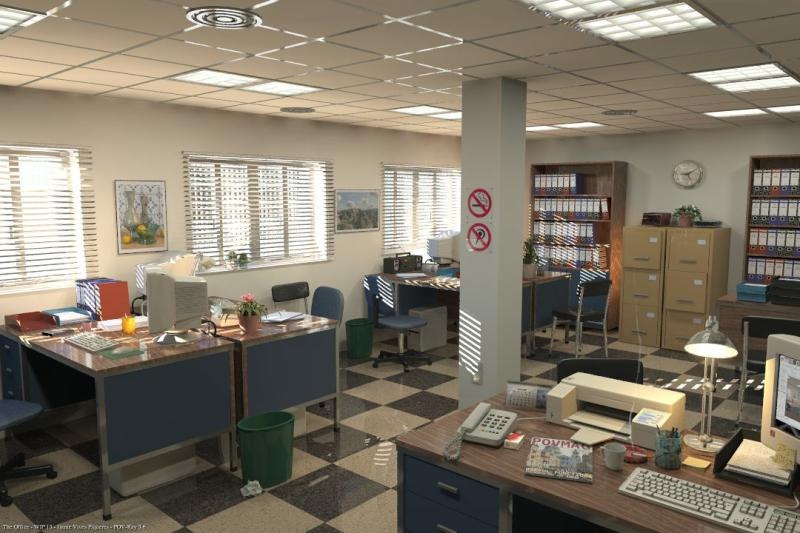
Image1

An office circa 2006. Once you’ve seen one, you’ve seen them all, pretty much.

The afternoon was a drag, even more so than usual. The influx of work – phone calls, emails, paper correspondence – demanding his attention was ceaseless. 5:30 seemed a long way off. Being pulled out for a second meeting by his boss for not turning over enough calls an hour really put his back up. He tried to defend his ‘stats’ by pointing out that it was simply impossible to get rid of some callers, but the manager was having none of it. And the issue of his timekeeping is brought up again. A rage welled in his chest. His boss was a snotty little cunt who had no idea of what actually doing the work entailed. He was momentarily tempted to get his coat and get the fuck out there and then. But he took a piss, washed his face and calmed down and decided to stick it out till 5.30. Eventually it came, and he headed home.

His house was a shit-tip but he couldn’t be arsed to do anything about it. He cracked open one of the cans left from the night before and called out for a pizza. It had been a shitty day and he deserved some kind of compensation, some kind of comfort. At least tomorrow was Friday.


The Kindle – and paperback – edition of Postmodern Fragments is available via Amazon in the UK …and in the US.

And if you’re loving my work, there’s more of the same (only different) at Christophernosnibor.co.uk

The Worker pt. 3: Wednesday Morning 3am

Holy fuck! He awoke with a start. He had been deep in sleep, in the middle of some long and winding epic dream. There had been some crazy alarms and sirens, fires everywhere and bombs dropping…. but in a jolting instant he realised that the alarm of his dream had been the alarm clock by the bed. How long ha it been going? He checks the time: 8:02. Fuck, shit, bollocks, bugger fuck cunt, he’s going to have to get a move on. He hauled his arse out of bed and threw on yesterday’s clothes that were strewn at the foot of the bed. No time for breakfast – he’d used up the last of the milk yesterday and hadn’t made it to the supermarket since – he brushed his hair, cleaned his teeth. He was running late, so no time for a shave today. 8:27 and he’s having to run to make the 8:30 bus: the bus-stop is an eight and a half minute walk but he can make it in half that at a run. He hates running, because he’s not fit – too much beer, too many cigarettes – and he hates arriving at work an exhausted ball of sweat. But he can’t be late. He’s in luck: the bus is running a couple of minutes late, and he arrives, panting and thoroughly fagged out just as it pulls up.

9:00 on the dot and he’s made it to the office, firing up his workstation, positioning his chair, the usual routine. The phone rang. He took the call, went through the scripted schpiel, dispensed some pointless information to the frustrated old goat at the other end of the line, updated the systems, shunted some papers around. Rinse and repeat. The phone rang. He took the call. Etc. Such is the daily grind of the 9-5.

The calls kept on coming and the papers kept on piling up, and while he was on the rota for taking his lunch hour from 12:30 to 13:30, he was stuck on a call with some irate customer and wasn’t able to get away until 12:50. But then, the phones were supposed to be manned by a certain number of staff – 10, equating to 50% of the team – at any given time, and the workshy heifer at the next desk was late back from her lunch. When she did arrive, he noted with disdain just how badly she was starting to smell, a side-effect of her fucked-up interpretation of the Atkins diet. As she ploughed her way through a large bag of pork scratchings, he paused when she realised he was clocking her, his face conveying a disgust and disbelief it was hard to disguise. She explained – not for the first time, and with a cloud of deep-fried and seasoned pork rind gusting from her chops as she spoke – that she could eat all the fats she wanted, but absolutely no carbs. Sure. His boss was circling like a shark. He couldn’t fathom why the power-hungry corporate tosser had taken such a dislike to him, but it seemed as though he was on a mission. He has to watch his back: one step out of line and the boss would be on him, and could bring him down. He’d seen it done before.


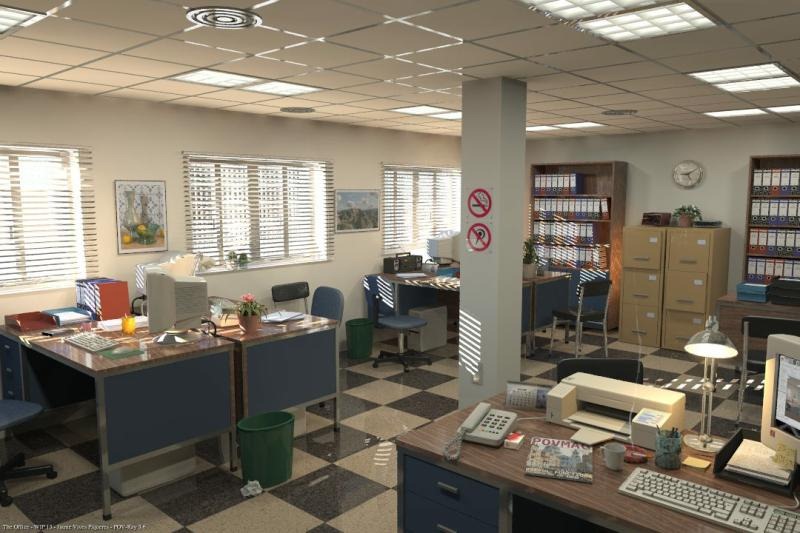
Image1

An office, 7am today and funnier than Ricky Gervais will ever be

He was getting hungry and struggled to contain his frustration. It was the same pretty much every day and the days had a tendency to run together, like watercolours on saturated paper. He could feel himself getting down. He was in a rut and he knew it. Same shit, different day and no mistake: every day drains into the next, and every day is exactly the same. Could be worse, he reminded himself. It was only work, after all, not his life. His evenings and weekends were his own, at least. Please give me evenings and weekends…

Lunch: he nipped out to the sandwich shop at the top of the street, bought a nutritionally vapid ham salad sandwich on flaccid white bread. The ham was dry, anaemic, the salad wilted to fuck. Sluiced it down with a can of Tango. He could ill afford to dine this way as he was well in the red and pay-day was still a fortnight off, but he simply couldn’t find the motivation to prepare a packed lunch.

His truncated lunch hour – he had to be back by 13:30, and while some of his colleagues were capable of getting away with pulling epic skives and late sign-ins, he was neither comfortable with nor in a position to do the same – was over all too soon and he returned to his desk, signed back into his terminal and the onslaught, the grind continued. The influx of work – phone calls, emails, paper correspondence – demanding his attention was ceaseless. 5:30 seemed a long way off.

The cleaner came round on her weekly circuit, with a bucket containing a couple of inches of fetid brown water and a Jaycloth, which she proceeded to smear over each desk in turn, before lifting the receiver of any phone not in use – or even phones in use if headsets were plugged in – and wiping the mouth and earpieces with the same crutty cloth. No rinse, only repeat: six, eight, ten desks and telephones would get this once-over before the encrusted cloth was returned to the bucket for a brief swill.

5:30 rolled around eventually, he switched off his workstation, clocked off, took a long, long piss that felt like heaven, and left the building. He’d hoped to get a couple of pints in after work, but Steve was taking his girlfriend out for a meal and Simon had his mum coming round. At the bus stop, his bowels started growling. He didn’t have log to wait for a bus home, but it got stuck in traffic. Discomfort began to nudge at his lower abdomen. The jam seemed to last forever, and he was practically touching cloth by the time he got home. He threw his jacket over the back of the sofa and went to curl one out. The relief!

Movements complete, he cracked open a can of beer. It didn’t last long. What to eat? There wasn’t much in. His funds were low and he’d not had the cash or motivation to make the trip to the supermarket at the weekend. A sad, salt-heavy microwave meal for one sat brooding in the back of the cupboard, so he nuked the plastic tray and chowed down the stodgy collation without enthusiasm, washed it down with a second can of lager. It was piss, but it was cold and alcoholic. He wanted more, so nipped round to the offy a couple of streets away and stuck a couple of four-packs on special on his credit card. He’d worry about paying it off later.

Cracking open the first of the eight fresh cans, he flicked on the TV but there was fuck all on so he fired up the PC and surfed for porn. He whipped up a serving of cream, then idled away the remainder of the evening on Facebook and another half dozen tins. Midnight rolled around and rather worse for wear, he decided it was time to hit the sack. He needed to sleep: there was work tomorrow.


The Kindle – and paperback – edition of Postmodern Fragments is available via Amazon in the UK …and in the US.

And if you’re loving my work, there’s more of the same (only different) at Christophernosnibor.co.uk
The Worker pt. 2: Ruby Tuesday, or, Tuesday’s gonna be the day that they’re gonna throw it back to you

Shit! How long has the alarm been going? He must’ve been sound asleep. The harsh buzz of the alarm slices through the darkness and sears his sleeping brain. He sits upright with a start and checks the clock: 7:52. He hit the snooze button and buried his head in the pillow, but it was no good. Under the duvet, it was warm and comfortable and life was good. But the alarm persisted and he forced himself to vacate his haven. He dressed, ate breakfast, brushed his hair, cleaned his teeth. He was running late, so no time for a shave today. 8:25 and he’s having to run to make the 8:30 bus: the bus-stop is an eight and a half minute walk but he can make it in half that at a run. He hates running, because he’s not fit – too much beer, too many cigarettes – and he hates arriving at work an exhausted ball of sweat. But he can’t be late, he’s been late too many times recently and his timekeeping has become an issue. He’s already on a first warning.

8:59 and he’s in the office, firing up his workstation, positioning his chair, the usual routine. The phone rang. He took the call, went through the scripted schpiel, dispensed some pointless information to the frustrated old goat at the other end of the line, updated the systems, shunted some papers around. Rinse and repeat. The phone rang. He took the call. Etc. Such is the daily grind of the 9-5.

The calls kept on coming and the papers kept on piling up, and while he was on the rota for taking his lunch hour from 12:30 to 13:30, he was stuck on a call with some irate customer and wasn’t able to get away until 12:50. But then, the phones were supposed to be manned by a certain number of staff – 10, equating to 50% of the team – at any given time, and the workshy heifer at the next desk was late back from her lunch. His boss was circling like a shark. He couldn’t fathom why the power-hungry corporate tosser had taken such a dislike to him, but it seemed as though he was on a mission. He has to watch his back: one step out of line and the boss would be on him, and could bring him down. He’d seen it done before.

He was getting hungry and struggled to contain his frustration. It was the same pretty much every day and the days had a tendency to run together, like watercolours on saturated paper. Another cup of rancid instant coffee as stagnant as his life, another plastic spoon, another whinging tosser, the hours passed into days passed into weeks passed into months passed into years, a wasted life, an accidental career. All the other jobs advertised locally were much of a muchness. No, the only way out was redundancy or retirement. Or death. He found it hard to rouse any sense of optimism. Too long in the rut, his spirit had been ground down and eventually crushed, all sense of hope extinguished. They owned him and he knew it.

Lunch: he nipped out to the sandwich shop at the top of the street, bought a nutritionally vapid ham salad sandwich on flaccid white bread. The ham was dry, anaemic, the salad wilted to fuck. Sluiced it down with a can of Tango. He could ill afford to dine this way as he was well in the red and pay-day was still a fortnight off, but he simply couldn’t find the motivation to prepare a packed lunch.

His truncated lunch hour – he had to be back by 13:00, and while some of his colleagues were capable of getting away with pulling epic skives and late sign-ins, he was neither comfortable with nor in a position to do the same – was over all too soon and he returned to his desk, signed back into his terminal and the onslaught, the grind continued. The influx of work – phone calls, emails, paper correspondence – demanding his attention was ceaseless. 5:30 seemed a long way off.


Image1

An office, 8:15 this morning


An hour later and his bladder was growing taught. He desperately needed to piss, but there was simply no respite. He was also tired, so tired. More cups of gut-rotting instant coffee was the only means available of fending off this terminal fatigue.

5:30 rolled around eventually, he switched off his workstation, clocked off, took a long, long piss that felt like heaven, and left the building. He didn’t have log to wait for a bus home. On arrival, he cracked open a can of beer. It didn’t last long. What to eat? There wasn’t much in. His funds were low and he’d not had the cash or motivation to make the trip to the supermarket at the weekend. A sad, salt-heavy microwave meal for one sat brooding in the back of the cupboard, so he nuked the plastic tray and chowed down the stodgy collation without enthusiasm, washed it down with a second can of lager. It was piss, but it was cold and alcoholic.

He flicked on the TV but there was fuck all on so he fired up the PC and surfed for porn. A quick one off the wrist and then idled away the remainder of the evening on Facebook and a couple more tins. Midnight rolled around and he decided it was time to hit the sack. He needed to sleep: there was work tomorrow.


The Kindle – and paperback – edition of Postmodern Fragments is available via Amazon in the UK …and in the US.

And if you’re loving my work, there’s more of the same (only different) at Christophernosnibor.co.uk
The Worker Part 1: I Don’t Like Mondays

A few years ago I blogged a story in 7 parts entitled ‘The Worker’, and each day’s post was written and posted on that day. The story subsequently appeared in the collection Postmodern Fragments: Writings on Work, Technology and Contemporary Living. To mark the publication of Postmodern Fragments on Kindle, I’m reposting ‘The Worker’ as originally conceived – only the first time around it began on Sunday, but the effect should be pretty much the same. Original typos have been maintained to preserve the integrity of the project.


The Worker pt. 1: I Don’t Like Mondays

The harsh buzz of the alarm sliced through the darkness and penetrated his dark place, his sleeping brain. He woke and was momentarily groggy before the realisation hits: Monday morning. 7:30. He hit the snooze button and buried his head in the pillow once more. Under the duvet, it was warm and comfortable and life was good. But the alarm persisted and he forced himself to vacate his haven.

He dressed, ate breakfast, brushed his hair, cleaned his teeth. He was running late, so no time for a shave today. 8:25 and he’s having to run to make the 8:30 bus: the bus-stop is an eight and a half minute walk but he can make it in half that at a run. He hates running, because he’s not fit – too much beer, too many cigarettes – and he hates arriving at work an exhausted ball of sweat. But he can’t be late, he’s been late too many times recently and his timekeeping has become an issue. He’s already on a first warning.

8:59 and he’s in the office, firing up his workstation, positioning his chair, the usual routine. The phone rang. He took the call, went through the scripted schpiel, dispensed some pointless information to the frustrated old goat at the other end of the line, updated the systems, shunted some papers around. Rinse and repeat. The phone rang. He took the call. Etc. Such is the daily grind of the 9-5. Why did he put up with it? Because there was nothing else. He needed to eat, to keep a roof over his head, pay the bills. It’s the white man’s burden alright.

Necessity is the mother of surrendering one’s dreams to grim reality. He was looking for a job and then he found a job, with prospects and benefits, so his interviewer, smug in his navy pinstripe suit and tan shoes had informed him. But it soon became apparent that the corporate ladder was all a con, and worse, a trap. A stop-gap job becomes a career.

The calls kept on coming and the papers kept on piling up, and while he was on the rota for taking his lunch hour from 12:30 to 13:30, he was stuck on a call with some irate customer and wasn’t able to get away until 12:50. But then, the phones were supposed to be manned by a certain number of staff – 10, equating to 50% of the team – at any given time, and the workshy heifer at the next desk was late back from her lunch.

He was getting hungry and struggled to contain his frustration. It was the same pretty much every day and the days had a tendency to run together, like watercolours on saturated paper. Another cup of rancid instant coffee as stagnant as his life, another plastic spoon, another whinging tosser, the hours passed into days passed into weeks passed into months passed into years, a wasted life, an accidental career. All the other jobs advertised locally were much of a muchness. No, the only way out was redundancy or retirement. Or death. He found it hard to rouse any sense of optimism. Too long in the rut, his spirit had been ground down and eventually crushed, all sense of hope extinguished. They owned him and he knew it.

Lunch: he nipped out to the sandwich shop at the top of the street, bought a nutritionally vapid chicken salad sandwich on flaccid white bread. The chicken was dry, anaemic, the salad wilted to fuck. Sluiced it down with a can of Coke. He could ill afford to dine this way as he was well in the red and pay-day was still a fortnight off, but he simply couldn’t find the motivation to prepare a packed lunch.

His truncated lunch hour – he had to be back by 13:00, and while some of his colleagues were capable of getting away with pulling epic skives and late sign-ins, he was neither comfortable with nor in a position to do the same – was over all too soon and he returned to his desk, signed back into his terminal and the onslaught, the grind continued. The influx of work – phone calls, emails, paper correspondence – demanding his attention was ceaseless. 5:30 seemed a long way off.

An hour later and his bladder was growing taught. He desperately needed to piss, but there was simply no respite. He was also tired, so tired. More cups of gut-rotting instant coffee was the only means available of fending off this terminal fatigue.

5:30 rolled around eventually, he switched off his workstation, clocked off, took a long, long piss that felt like heaven, and left the building. He didn’t have log to wait for a bus home. On arrival, he cracked open a can of beer. It didn’t last long. What to eat? There wasn’t much in. His funds were low and he’d not had the cash or motivation to make the trip to the supermarket at the weekend. A sad, salt-heavy microwave meal for one sat brooding in the back of the cupboard, so he nuked the plastic tray and chowed down the stodgy collation without enthusiasm, washed it down with a second can of lager. It was piss, but it was cold and alcoholic.

He flicked on the TV and vegetated in front of a series of mundane lifestyle and ‘talent’ shows with a couple more tins. Midnight rolled around and he decided it was time to hit the sack. He needed to sleep: there was work tomorrow.


Image1

An office, today.


The Kindle – and paperback – edition of Postmodern Fragments is available via Amazon in the UK …and in the US.

And if you’re loving my work, there’s more of the same (only different) at Christophernosnibor.co.uk